Ceremony advice
What Actually Makes a Ceremony Personal?
Kesha Dionne · Aug 26 · 6 min read
Updated: 4 days ago
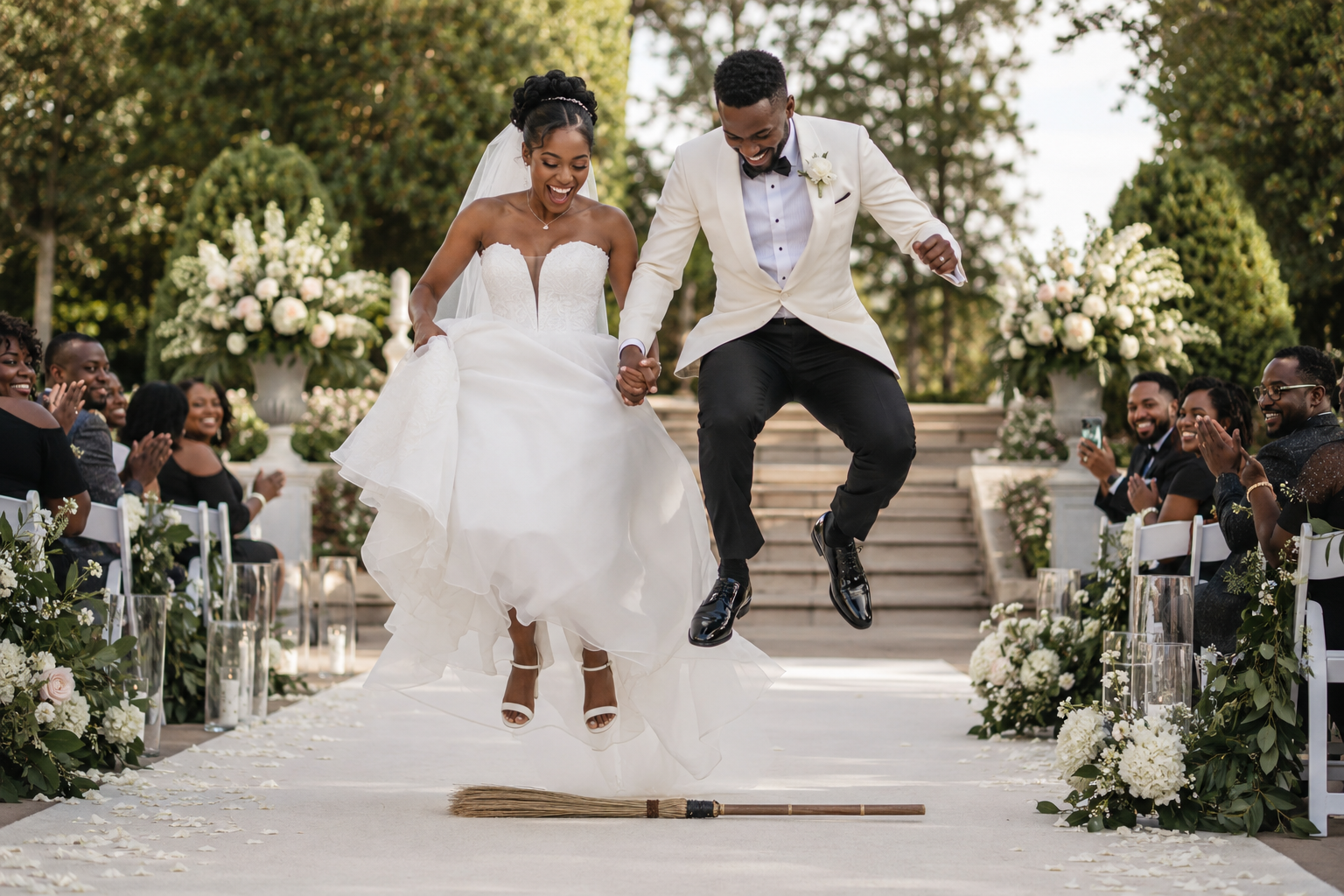
There is a difference between having a ceremony with personal touches and having a ceremony that feels personal from beginning to end.
Personal touches are wonderful. A favorite song. A reading from someone you love. A unity ritual connected to your family or culture.
But the ceremony should not feel like a standard script with your names dropped into a few blank spaces—and then a special detail added near the end to make up for it.
The personal part should be woven throughout.
It should be in the way your story is told, the tone of the words, the traditions you choose, the people you include, and the energy you want everyone to experience.
That does not mean your ceremony has to be long, elaborate, or packed with extras.
It means the choices have a reason behind them.
Begin with what matters to the two of you
Before choosing readings, rituals, or ceremony language, step back and think about what you want the ceremony to say about your relationship.
Ask yourselves:
What do we want this moment to mean?
What parts of our relationship do we want our guests to understand?
Do we want the ceremony to feel romantic, joyful, spiritual, lighthearted, traditional, or like a blend of several things?
Are there family, faith, or cultural traditions that matter to us?
Is there anything people expect that does not belong in our ceremony?
How do we want to feel while we are standing there?
You do not need perfectly polished answers. You are simply giving the ceremony a direction.
Once you understand what matters most, it becomes much easier to decide what belongs—and what is only taking up space.
Let your story do more than list the dates
A ceremony becomes personal when guests learn something about the relationship they came to celebrate.
That does not require a full timeline beginning with the day you met and ending with the proposal. Your guests do not need every date, location, and plot point.
They need the details that reveal who you are together.
Maybe one of you knew early while the other needed a little more convincing. Maybe you built your relationship through long-distance calls, blended two families, supported each other through a difficult season, or discovered that grocery shopping together can somehow turn into a whole event.
The details can be heartfelt, funny, or both. What matters is what they show.
A small story about your partner remembering your exact coffee order can reveal attentiveness. A running joke can show the ease between you. The way you handled a hard season can speak to trust, patience, and how you show up when life gets real.
That is where the ceremony starts sounding less like a biography and more like a reflection of your relationship.
Choose the right tone
Personal does not automatically mean deeply serious.
Your ceremony can hold emotion and still make room for laughter. It can include tradition without becoming stiff. It can be spiritual without using language that does not reflect your beliefs. It can be short and still carry weight.
The right tone is the one that fits the two of you.
If laughter is part of your relationship, let some of that into the ceremony. If you are naturally private, you do not have to share every intimate detail to make the words meaningful. If family and tradition are central to your lives, create space for them with intention.
You should not have to perform a different version of yourselves just because you are standing in front of your guests.
Keep the traditions that mean something
Wedding ceremonies come with plenty of traditions—but none of them need to appear simply because “that is what people do.”
You can keep the traditions that connect with you, adapt them, or leave them out.
That may mean:
Including a spiritual or cultural ritual
Asking parents or loved ones to offer a blessing
Exchanging personal vows along with traditional ones
Honoring someone who is no longer physically present
Recognizing children or the joining of two families
Choosing a reading connected to your relationship
Inviting your guests to make a community promise
Creating a quiet moment for remembrance or reflection
The question is not whether an idea looks beautiful on a wedding website.
The question is whether it means something when the two of you do it.
If the answer is yes, it has a place. If the answer is no, you have permission to skip it.
Include your people with purpose
There are meaningful ways to include the people you love without giving everyone a job.
A parent, sibling, close friend, or child can share a reading, offer a blessing, take part in a ritual, carry the rings, or stand for a moment of recognition.
You can also include your guests as a group. Your officiant might invite them to affirm their support for your marriage or pause to recognize the community that helped bring you to this day.
The important part is choosing participation that fits the person and the ceremony.
Your quiet cousin does not need to be handed a two-page reading because you were trying to find them something to do. And your ceremony does not need six different elements simply because several people are important to you.
Thoughtful inclusion will always land better than inclusion for inclusion’s sake.
Write vows with something real to hold onto
Whether you write your own vows or repeat words after your officiant, the promises should reflect the marriage you intend to build.
Personal vows can include a memory, something you value about your partner, and a glimpse of the future you see together. But they should also include actual promises.
What will it mean to love this person in everyday life?
What will you protect, support, practice, or continue choosing?
Maybe you promise to communicate honestly, make room for each other’s dreams, keep laughter in your home, show up during the hard seasons, or continue building a life where both of you can grow.
The strongest promises are not the ones that sound the grandest. They are the ones you understand—and intend to keep.
Music can shape the moment
The ceremony begins before the first word is spoken.
Music helps create the energy as guests arrive, as you make your entrance, and as you walk back down the aisle together. Those choices do not have to come from a traditional wedding playlist unless that is what you genuinely want.
An instrumental version of a favorite song may carry the emotion without distracting from the entrance. A song tied to your family or culture may bring another layer of meaning. Your recessional can be joyful, unexpected, and completely different from the processional.
Choose music based on what it adds to the moment—not only because it is popular right now.
Give your officiant more than the basics
Your officiant can only work with what they take the time to learn.
Names, dates, and a few general facts are not enough to create a ceremony with depth. The conversations and questionnaires should uncover the stories, qualities, turning points, and everyday details that reveal how your relationship actually works.
Do not worry about giving perfect answers. Tell the truth. Share the funny part. Explain the detail that may seem small but means everything to you. Mention the family dynamic, cultural element, or sensitive subject that needs to be handled with care.
A good officiant will know how to listen for what matters, shape it into a ceremony, and protect what should remain private.
That is part of the work—not an extra favor.
Think about the experience, not only the script
The words matter, but the ceremony is more than the words.
It is also the pacing, the pauses, the transitions, and the way the room is guided. It is knowing where to stand, when to hand off the rings, how to hold your vow book, and what happens after the kiss.
It is being able to look at your partner instead of worrying about the next instruction.
Personalization should not create more work for you on the wedding day. When the ceremony has been thoughtfully planned and confidently led, you can be fully present inside it.
That presence is part of what your guests feel too.
A personal ceremony does not need everything
More elements do not automatically create more meaning.
You do not need personal vows, three readings, two rituals, a poem, a musical selection, a guest blessing, and a surprise presentation unless all of that genuinely belongs.
Sometimes the most personal ceremony is a focused one: a warm welcome, a beautifully told story, promises with substance, and a room fully connected to what is happening.
The goal is not to prove how different your ceremony can be.
The goal is to make choices that make sense for the two of you.
Make room for the two of you
Your ceremony can carry your history, your humor, your people, your beliefs, and the life you are building—without trying too hard or becoming something you have to perform.
Begin with what matters. Choose the details with intention. Let your officiant shape the words and guide the experience so you can stand there, look at each other, and be part of it.
Because when the ceremony is personal in all the right places, your guests do not leave talking about how different it was.
They leave saying, “That was so them.”